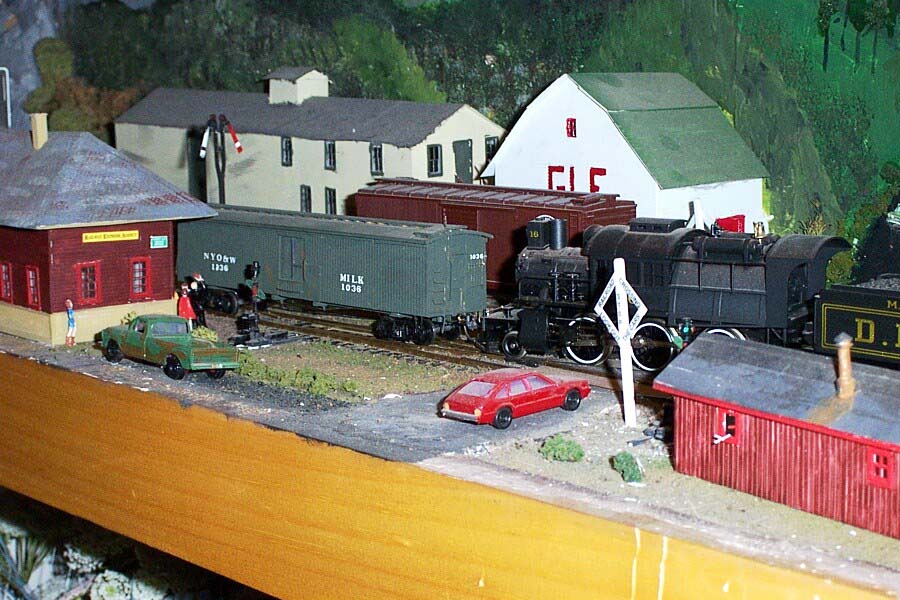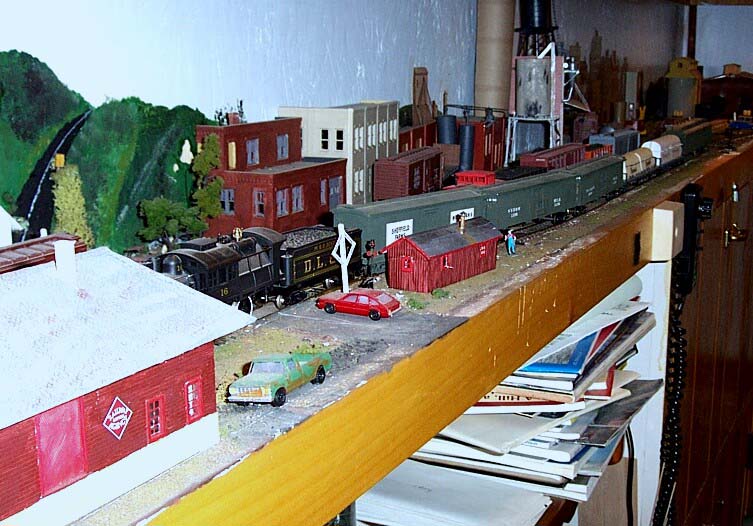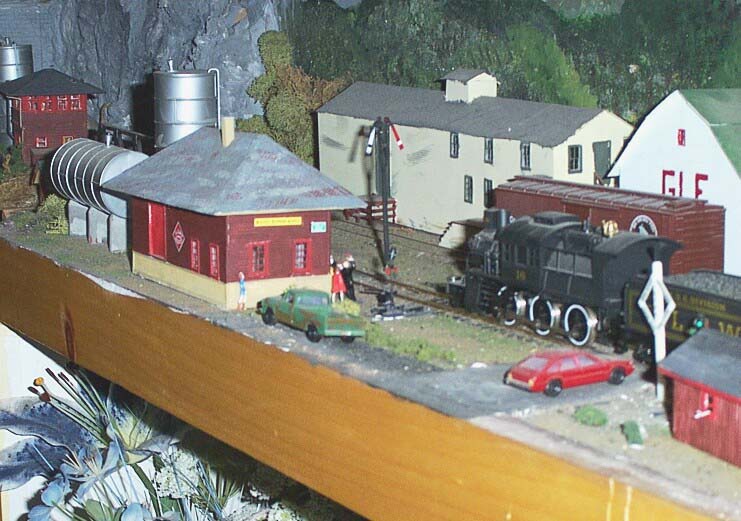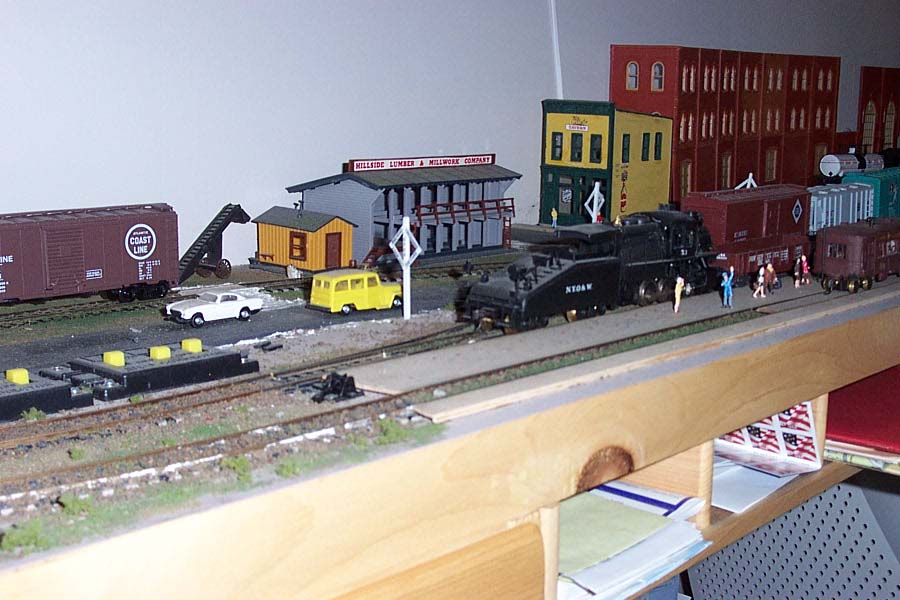
What has Maine got to do with the O & W? Actually, more than one would think. First, at least, some of the traffic that was turned over to the New Haven at Maybrook probably found its way to Maine. Second, the O & W”s tugs probably called at Portland with barge loads of coal. Third, The O& W sold five Y-2s to the Bangor & Aroostock. Fourth, I did a two-hour presentation on the O & W at a 470 Club meeting. Finally, I live in Maine, and I model the O & W.
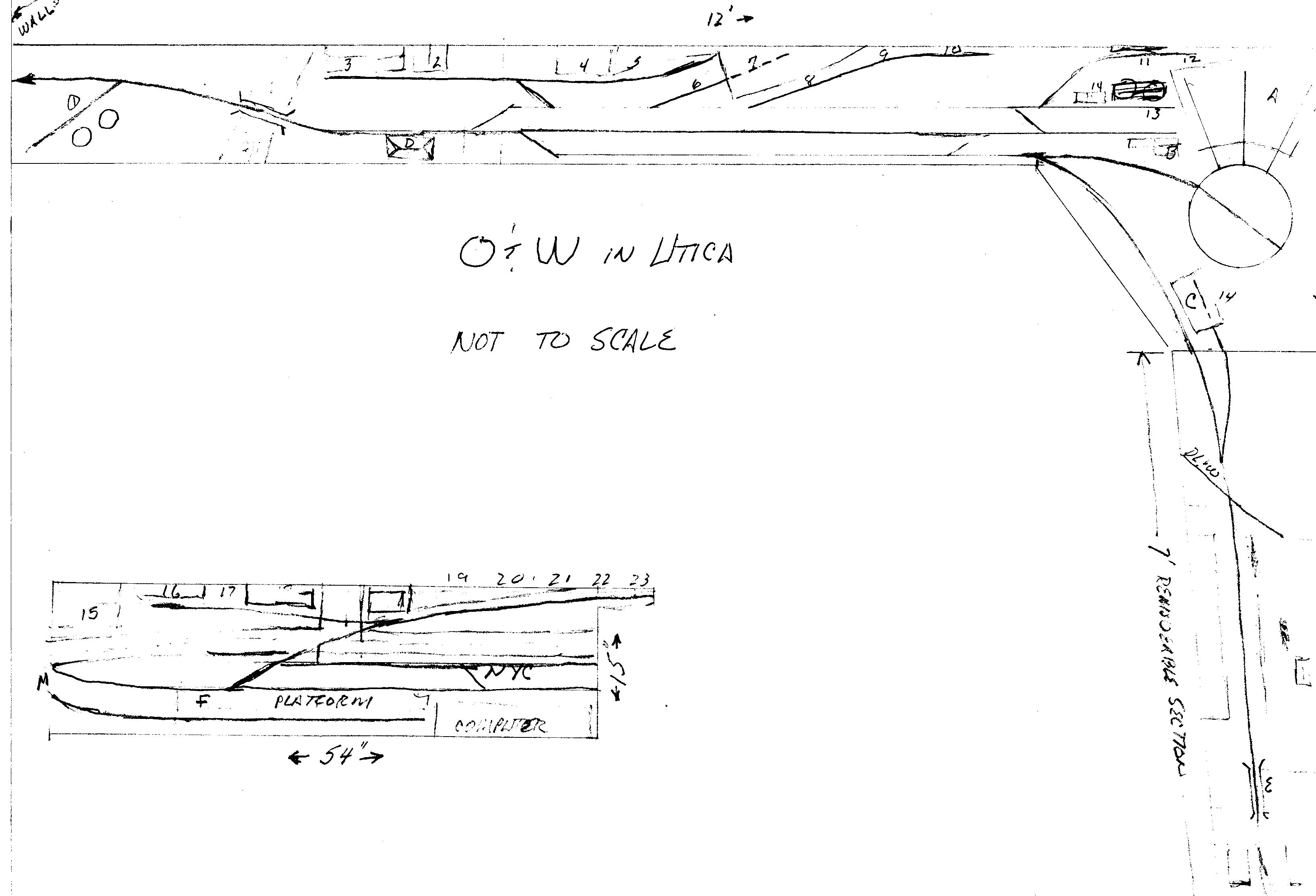
A move to Maine in 1998 meant the dismantling of my large N scale layout. (O & W, of course) We went from a nine-room house to a four-room basement apartment. After building a kitchen and bathroom it was time to seek a right-of-way for the O & W. The drawing shows what I ended up with. The main section is 12 feet long by 1 foot wide. A two track staging yard is in the bedroom. The layout was then designated Rome.
The purchase of a computer necessitated the construction of a computer desk. It also resulted in a 16” x 54” area for more layout. An 8’ removable section connects the two. This also led to calling it Utica instead of Rome. Besides, I was born and raised in Utica.
I operate the layout with a card system. Each siding has a number, and I determine what is shipped/received for a week. A waybill tag is made up for each load or empty. This tag also indicates the car’s routing, both inbound and outbound. The tag also indicates whether the car can be re-loaded, and how long it stays at the spot. I use only 1 or two days to keep things moving. The process is repeated for each siding number. Once this is done, the cards are shuffled and dealt into 7 piles. These are placed in envelopes labeled Monday, Tuesday………etc. The first time around, the tags are removed from Monday’s envelope, let’s say. The appropriate car is matched to the tag and placed at its spot. The tags are turned over to determine if they will be picked up the next day. If so, the car card is put into an envelope marked “out”. Otherwise it stays put. The tags are removed from Tuesday’s envelope, matched to cars and placed either on SU – 1, or the NYC interchange. When the “day” is finished, the outbound tags are put in Monday’s envelope. These will be the cars for next Monday’s session. The system then becomes automatic. Since some cars take two days to load/unload, there is a continuous change. Also, empties generated can be reloaded. You really don’t know what you have for work until you open the envelope. There is also an enveloped marked “hold”. If a car cannot be spotted it is held until it can. I store cars in the bedroom, in boxes, under the staging tracks. To me, the advantage of this system is that you can stop at any time and know where you are in the day.
Photos
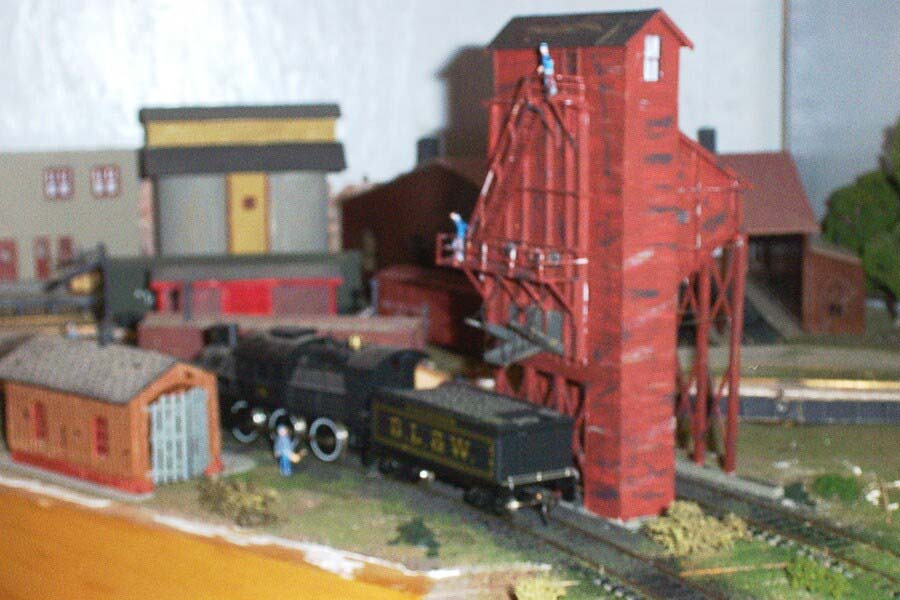
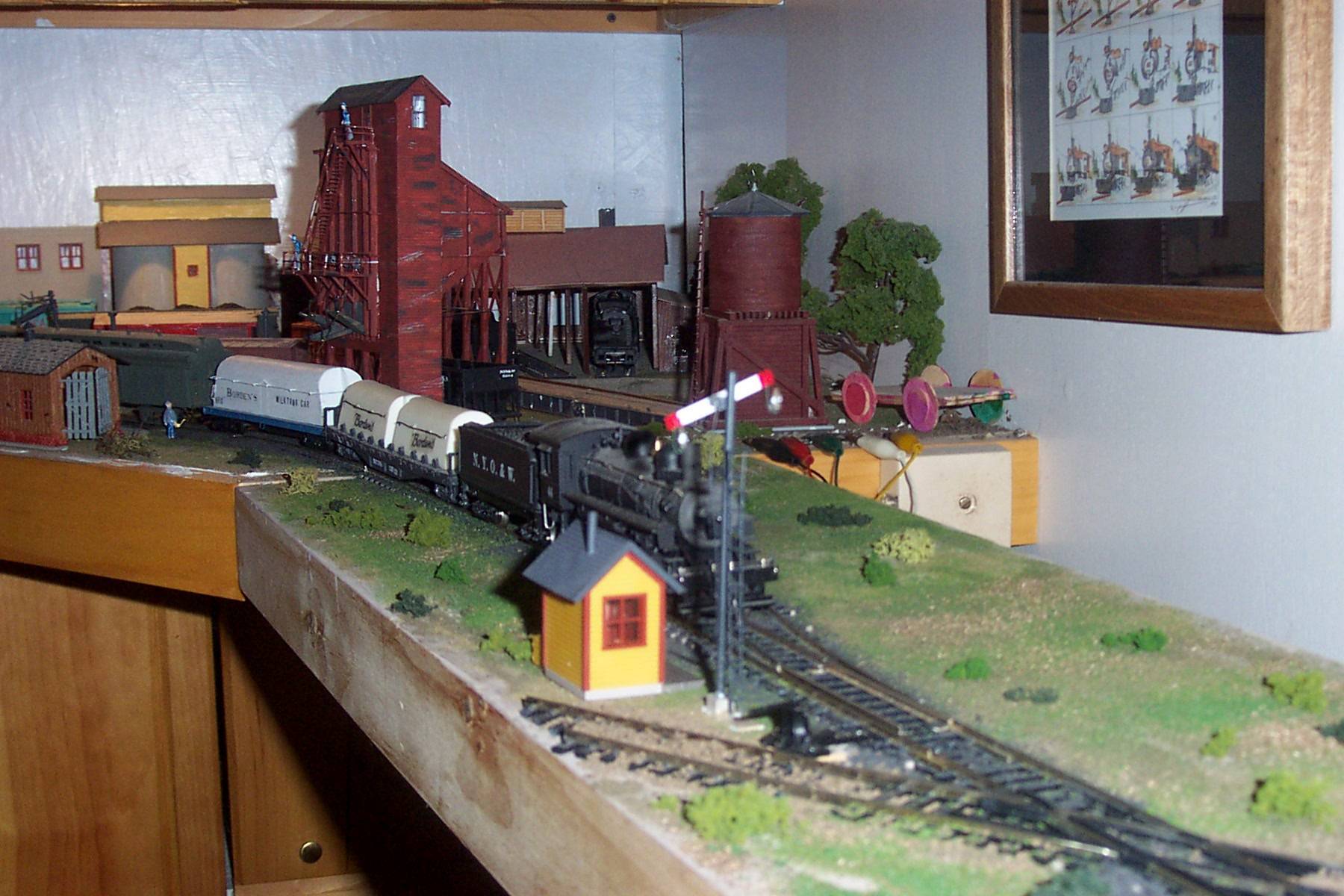
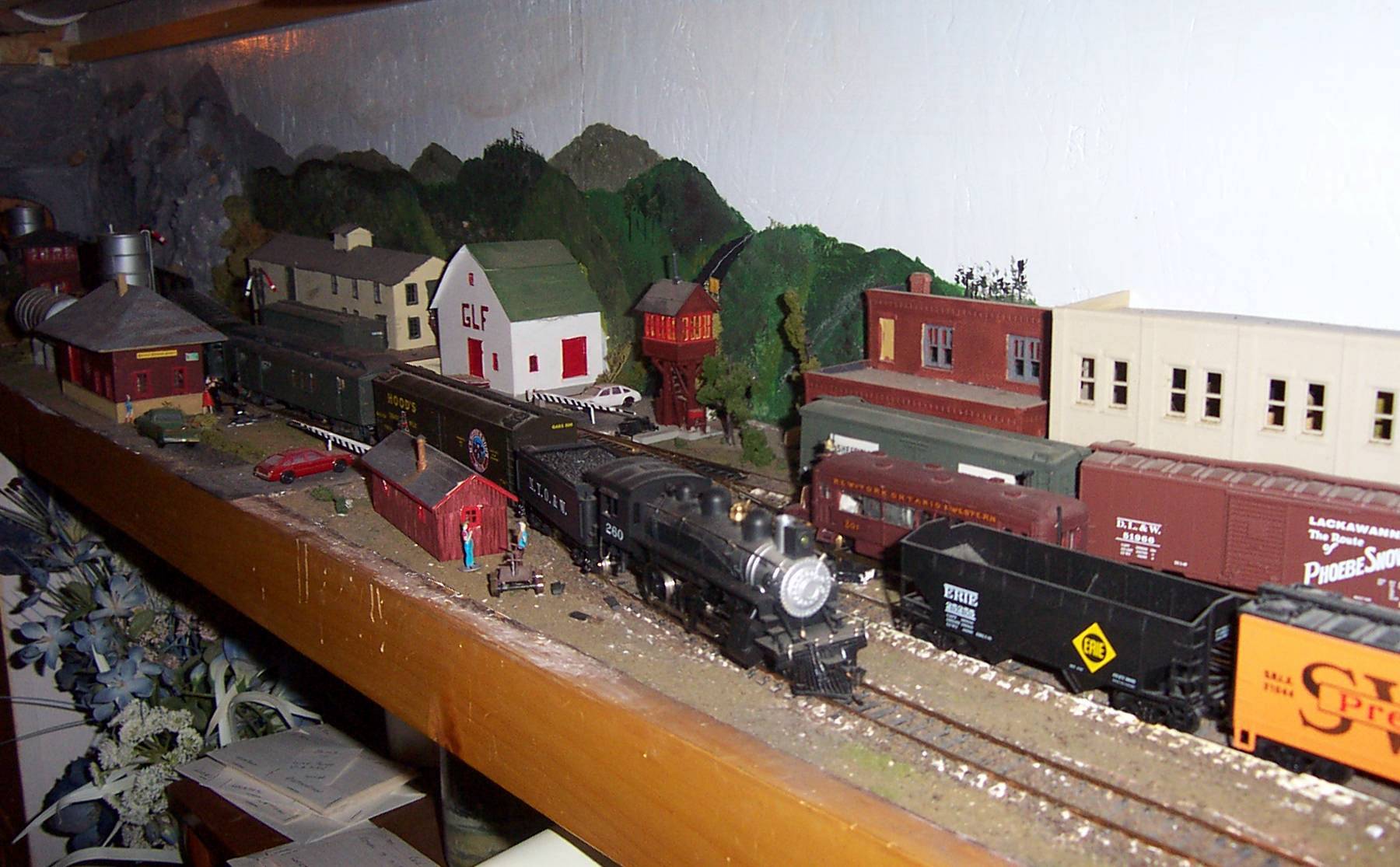
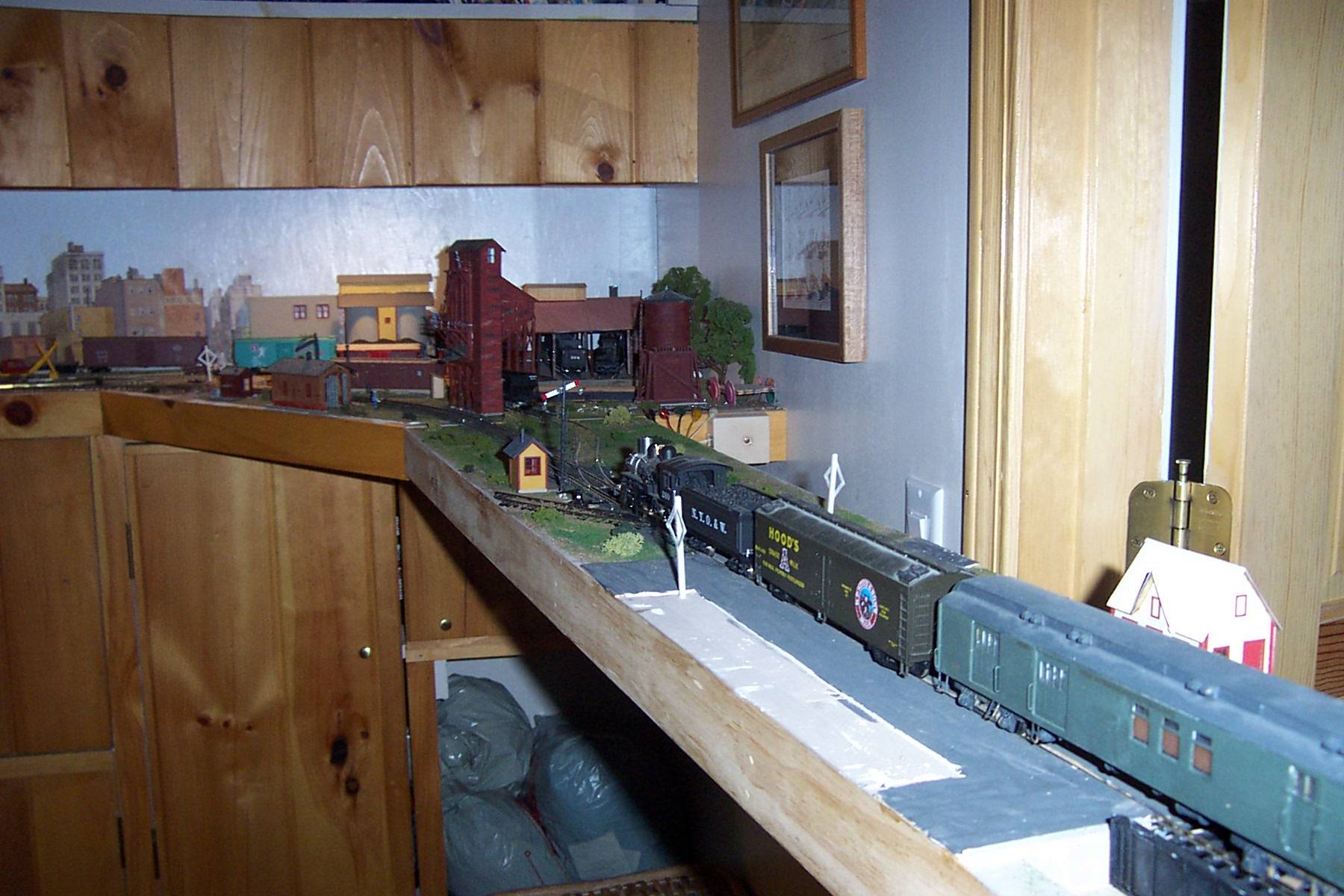
#1 A “borrowed” D.L.&W. camelback gets its tender topped off at the Utica coal tower. It will then back to the Utica terminal to take out the Utica branch Milk Train.
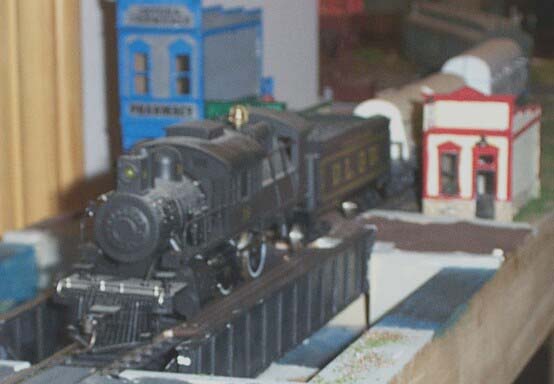
#2 The Milk train has left the terminal and rattles across bridge #50.
#3 An O & W milk car is picked up. This will be the working car as it is not fully loaded.
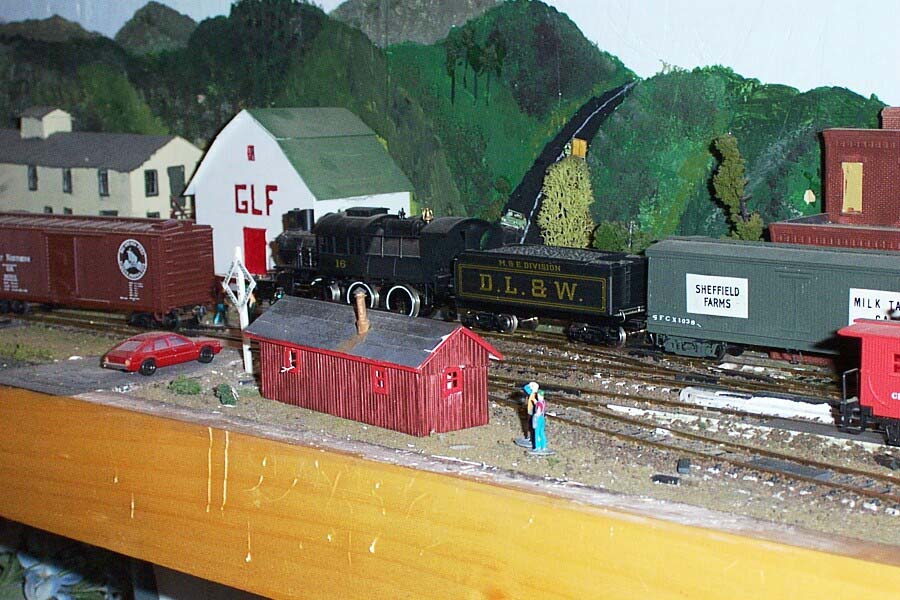
#4 Two cars are to be picked up at New Hartford. A lot of switching is involved as on car is facing the locomotive and there is another car ahead of it.
#5 The locomotive now prepares to pull the loaded car from the creamery (left background) clear so it can run around it, and line up its train.
#6 & #7 With everything back together, the Milk train approaches New Hartford station.
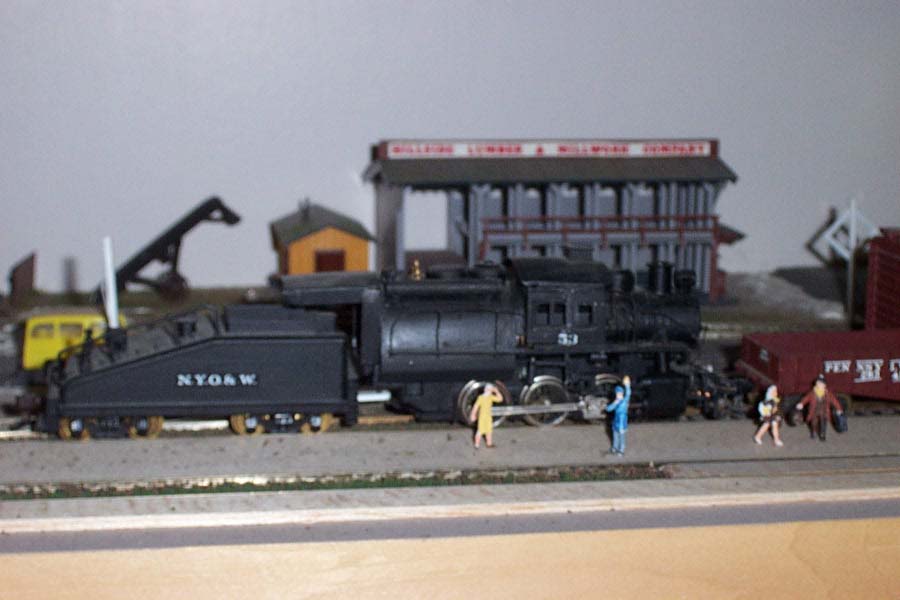
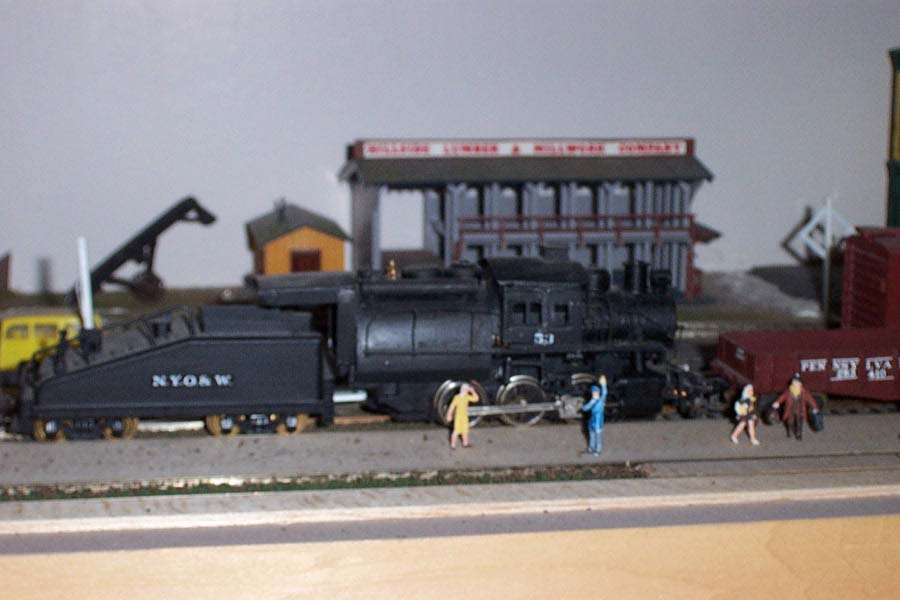
#8, 9 & 10 Now that the Milk train has left, #53 can get back to work.
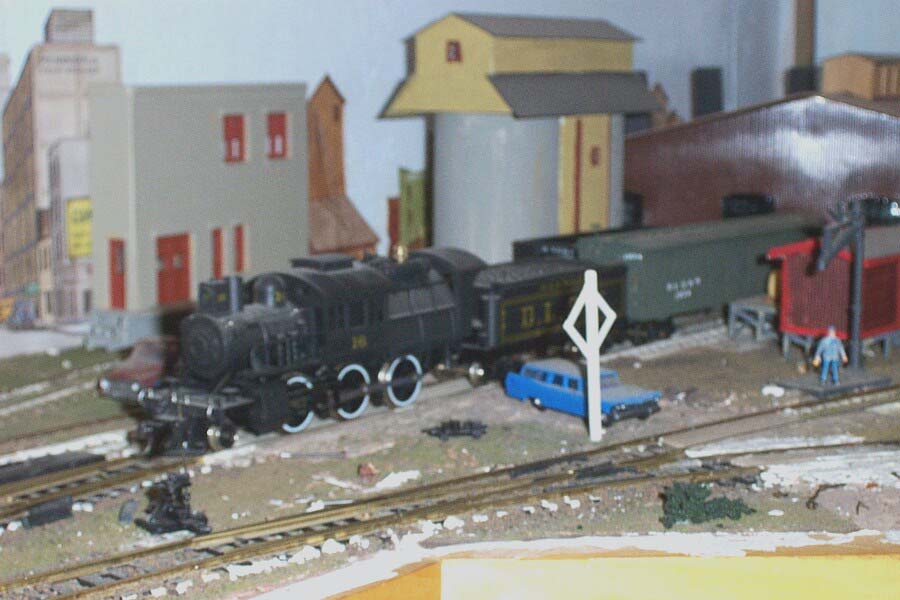
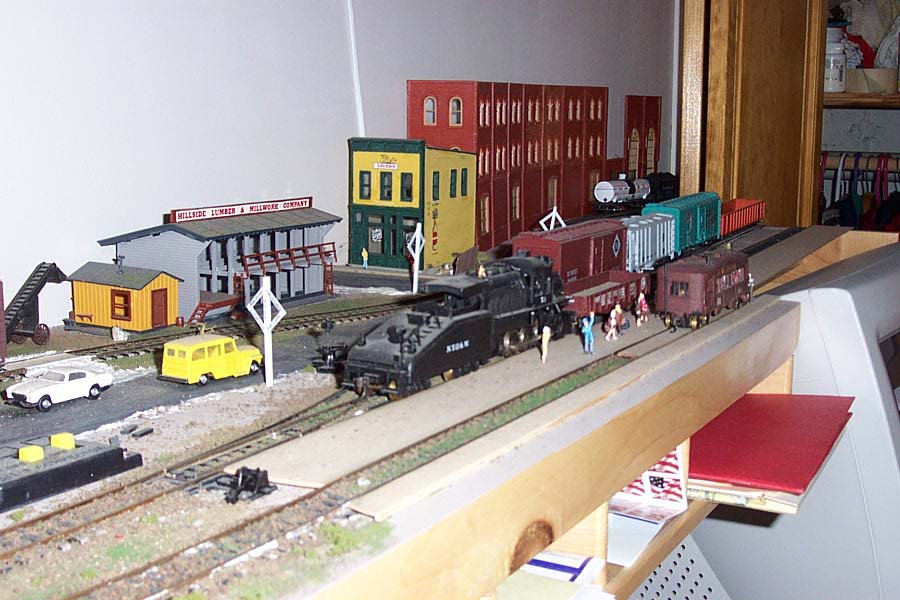
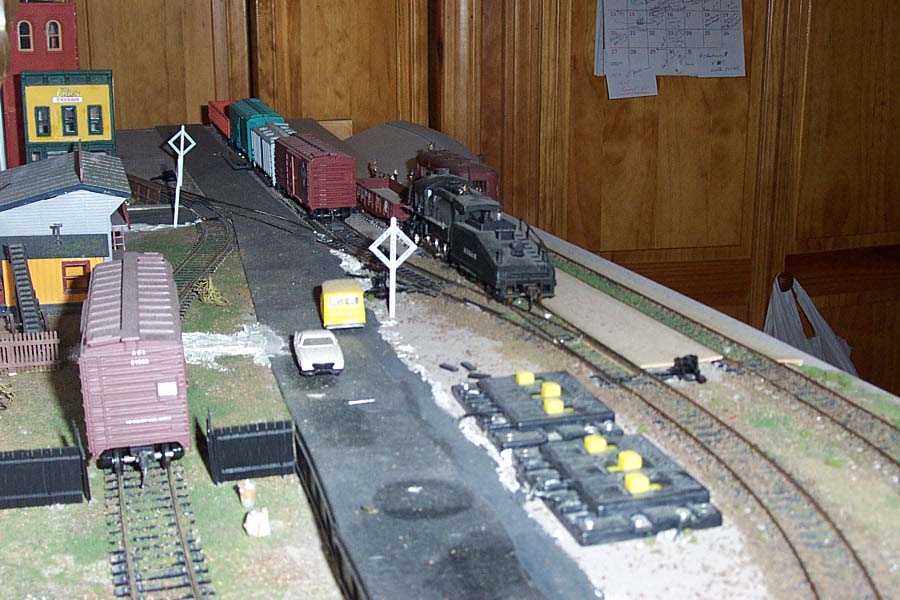
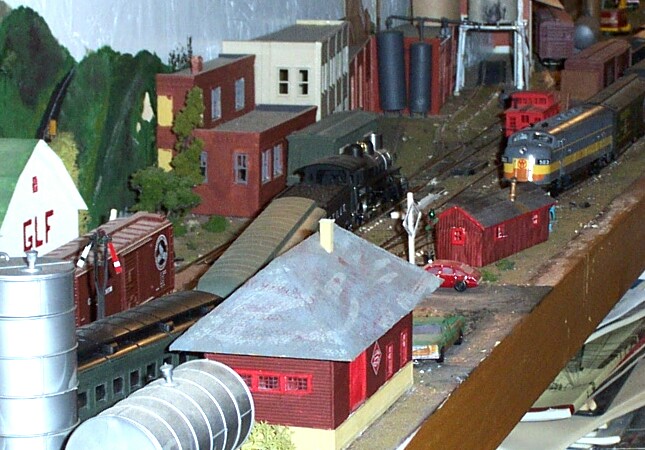
#11 & 12 are general views of the Utica terminal. It is on top of my computer table, and is connected to the rest of the layout by an 8 foot removable bridge
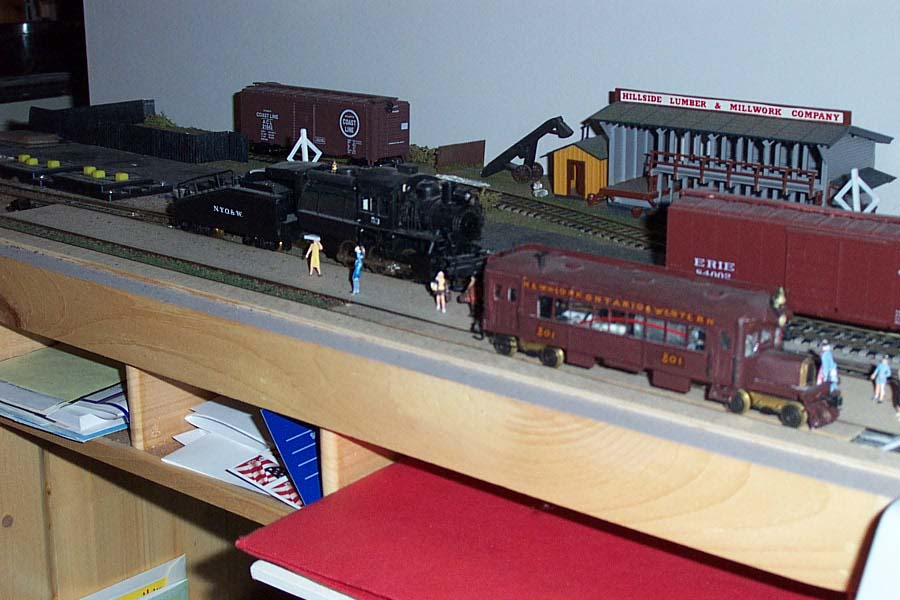
#13 The Sykes Rail Bus waits for a chance to get back to the yard to be turned and serviced for its afternoon run back to Delhi.
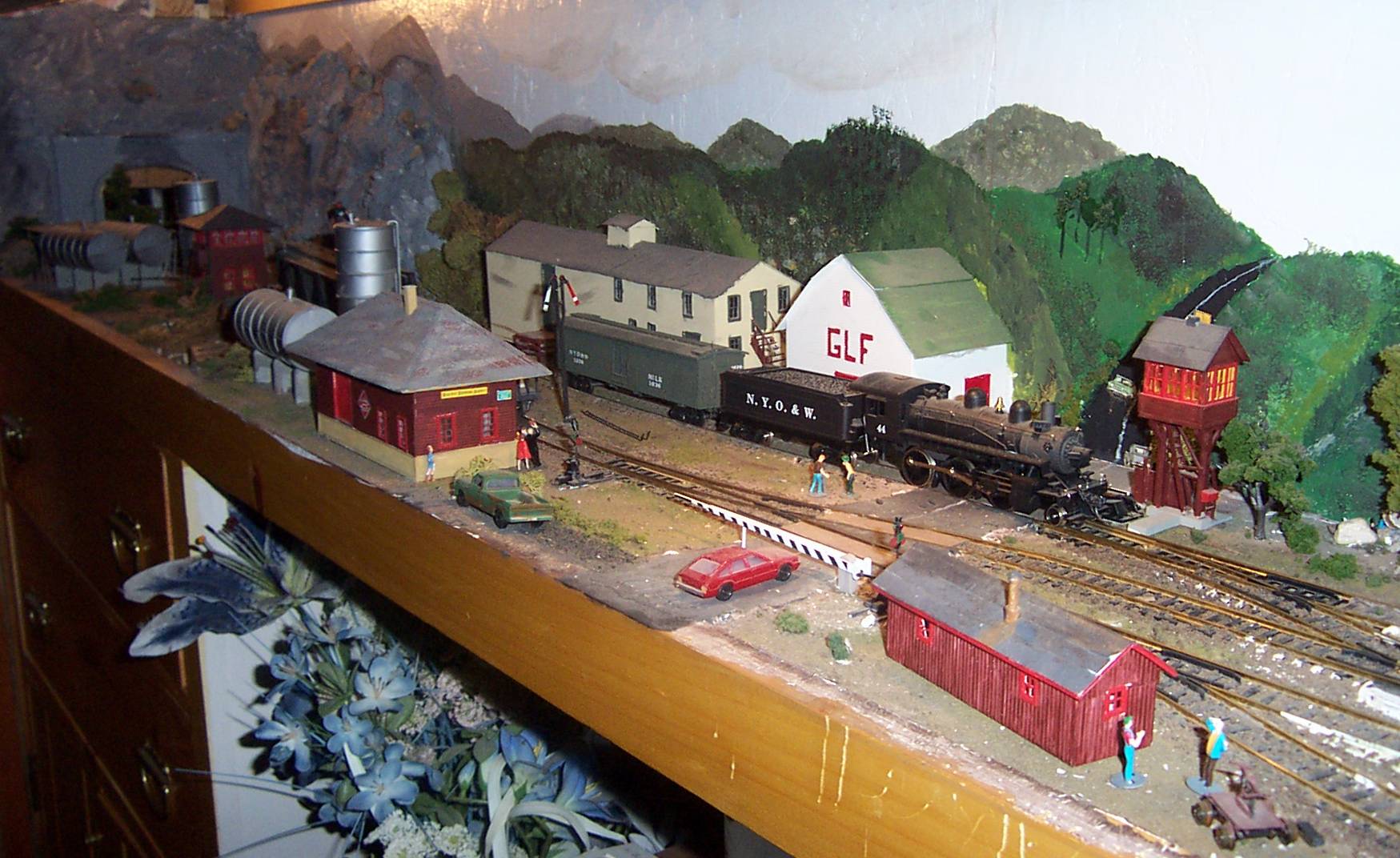
#14 Engine # 44 on the inbound milk had a clear signalat the DL&W crossing.
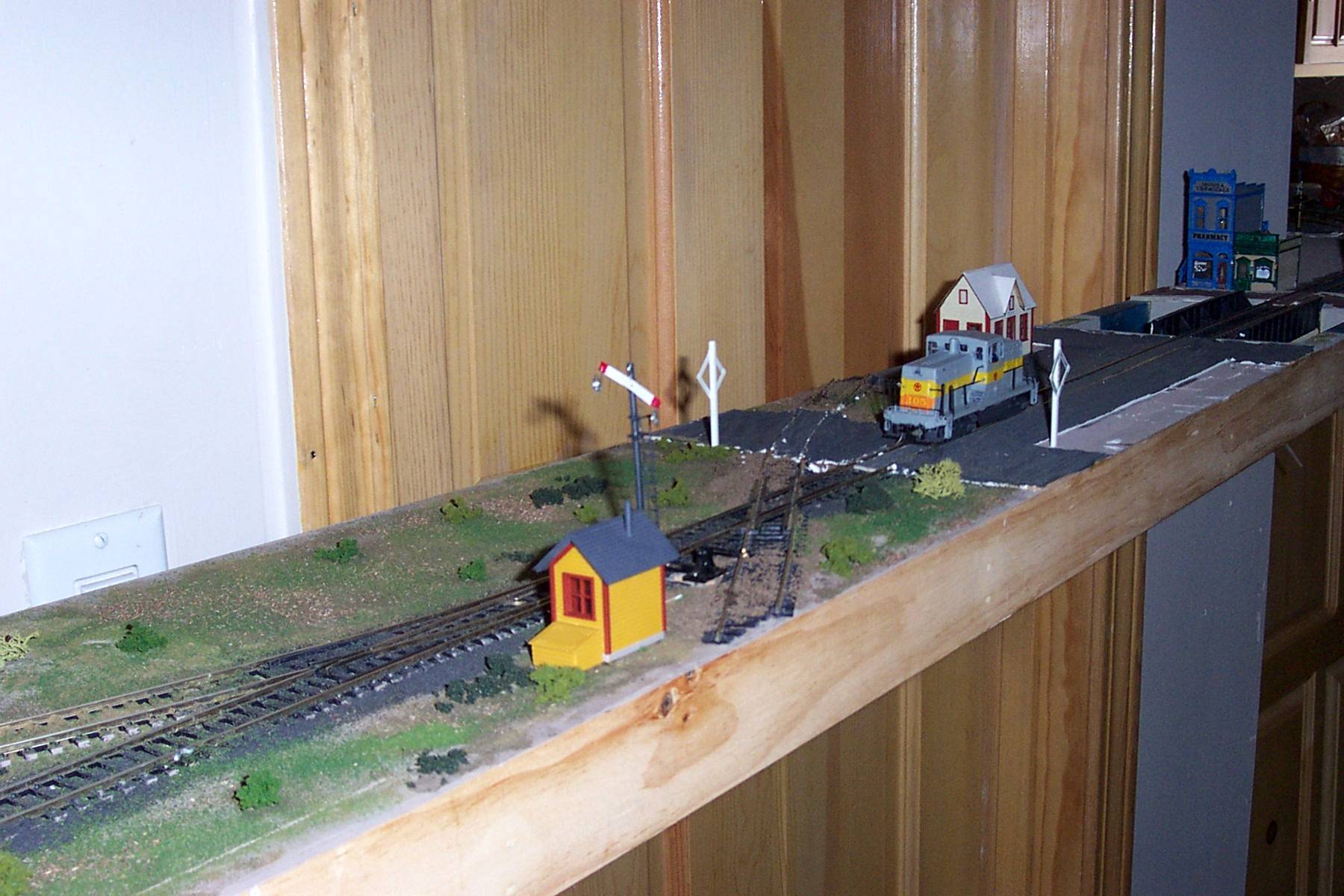
#15 44 tonner #105 is crossing Noyes Street on its way back to the yard.
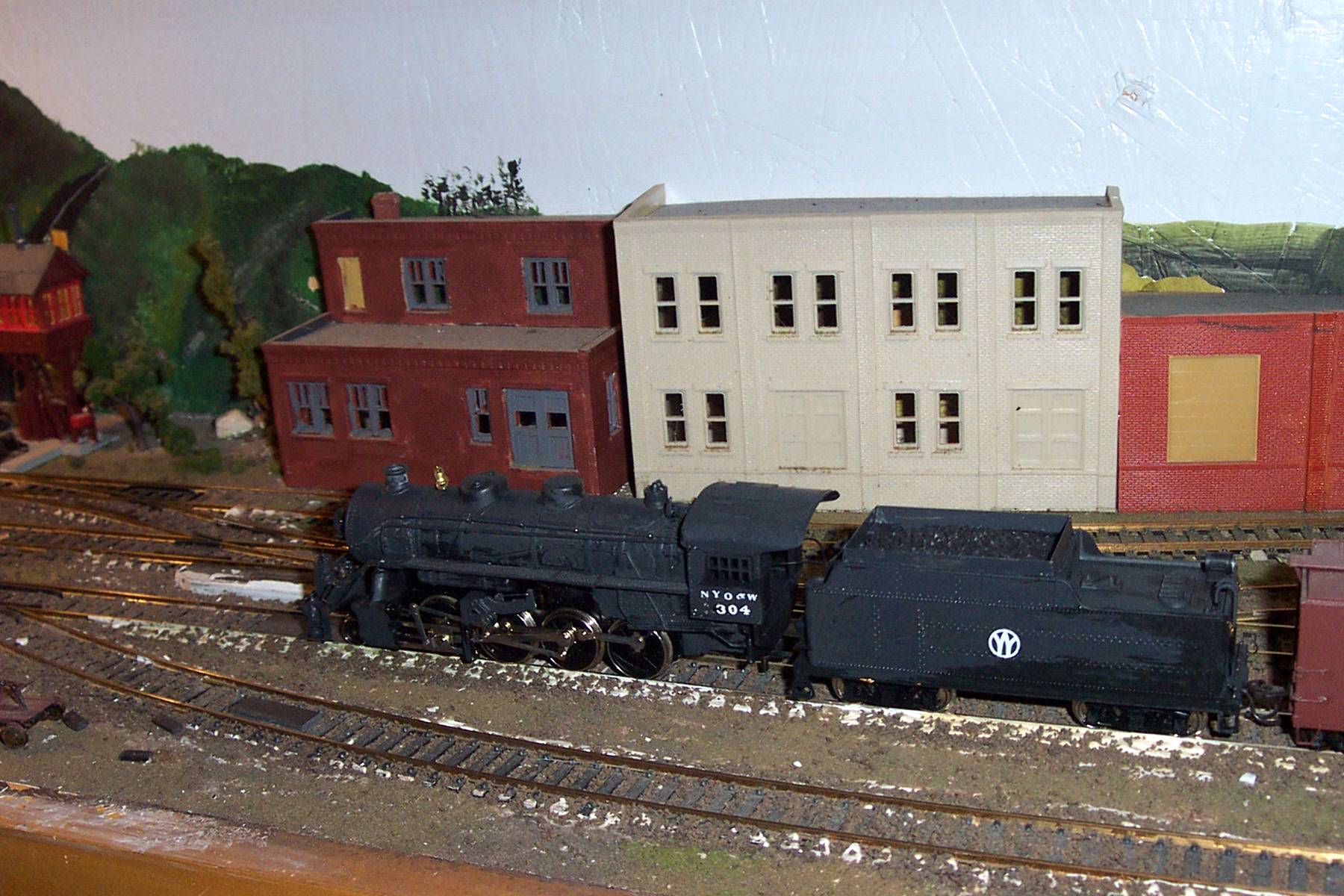
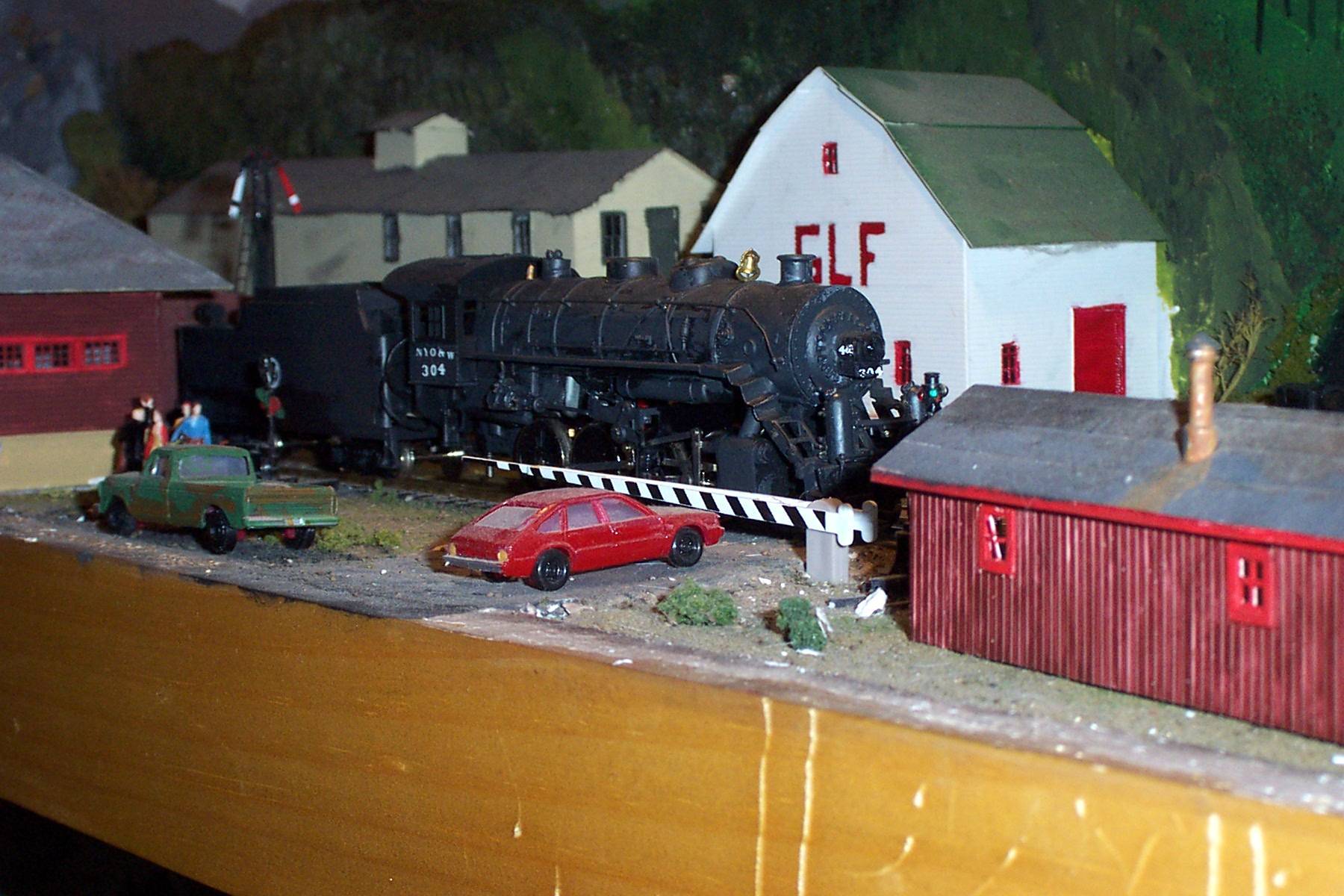
#16 W-2, #304 is ready to depart for Norwich with US-2.
#17 An empty O&W milk car is spotted at New Hartford.
#18 It's work done at New Hartford, the inbound milk heads for the terminal.
#19 W-2 #304 brings SU-1 through New Hartford.
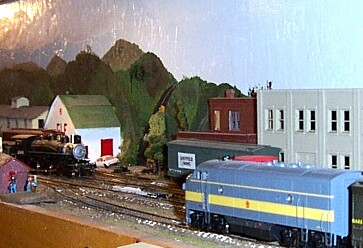
#20 & #21 F-3 #503 waits while a southbound passenger gets in the clear. (Yeah I know it never happened, but it still makes a nice photo)
#22 This show a removable section.
Layout Key
Industries
- Oil Dealer
- G.L.F.
- Creamery and Ice House
- Milk Plant
- Paper Mill (Waste Paper)
- “ “ (Coal and Chemicals)
- “ “ (Shipping)
- “ “ (Shipping)
- Builders Supply
- Grocery Supply
- Swift’s Meat
- Milk Plant (Powdered Milk)
- Coal Company
- Freight Platform (Team track)
- Coaling Tower
- Scrap Yard
- Holland Furnace
- Coal yard
- Lumber Yard
- – 22 Utica Steam Cotton Mills (Shipping and Receiving)
- " "
- " "
- Chemicals
- Coal
Significant Buildings
A. Roundhouse
B. Milk Platform
C. Coaling Tower
D. New Hartford Station
E. Bridge 50
F. Union Station Platform